
 REVIEWS ON

Professional Termite Inspections Hills District and Western Sydney
Whether you’re worried you might have termites or just need to book your annual termite inspection, call the termite specialists at Serial Pest Control.
We take our time to carry out comprehensive termite inspections and use the latest equipment – moisture meters, termite motion detectors and thermal imaging cameras – to make sure we don’t miss a thing!
As Serial Pest Control are fully licensed and insured to carry out all aspects of termite management, you can have confidence that we will help protect your home.
IMPORTANT:
If you think you have found termites or termite activity…
- Try not to disturb them further after the initial discovery
- Don’t spray them with insecticides
- Don’t break open wood / mud tubes to investigate
All these activities can make it more difficult to identify the extent of the problem and make them more difficult to control, as they will often leave the area temporarily when disturbed.
If you’re worried you might have termites just give Serial Pest Control a call
Our comprehensive termite inspection
All termite inspections should be carried out according to Australian Standards AS3660. Serial Pest Control strictly follow these requirements and use additional equipment to ensure we investigate every suspect area.
Termite inspections are designed to report on 3 main findings:
- Whether there is any termite damage to the building or structural elements
- Whether there are any active termites on your property (in the yard and building)
- If there are any building faults or environmental conditions that could make your house more likely to come under termite attack
- Areas of the yard within 30m of the main building, including trees, fencing, sheds and carports
- The outside perimeter of the home
- Sub-floor (if you have one)
- All interior rooms of your home (include the garage)
- Roof void
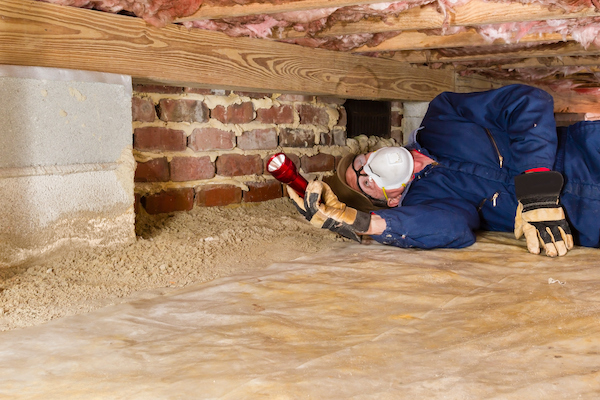
Apart from looking for signs of termite activity and termite damage, we are looking for areas of moisture (leaks and poor drainage) and building faults that may allow termites to get into the building without being noticed.
More information on termites in Sydney.
In carrying out a termite inspection, it’s important to understand that termite inspections are visual inspections, which means our inspectors can only inspect areas to which they can gain access. They are not allowed to move items of heavy furniture to gain access to a room or wall. (We’re not trying to be difficult, this is stipulated in Australian Standards and limited by industry insurance companies).
However, we are able to use equipment to help us ‘see’ behind walls, in any areas we may have concerns. If during the inspection we identify an issue that requires further investigation, we will recommend an invasive inspection (additional fee).
An invasive inspection may require moving items and/or cutting holes in walls or floors to investigate potential termite activity.
To support the knowledge and experience of our termite inspectors, Serial Pest Control use a variety of equipment to detect termite activity and excess moisture levels:
- Donger: a tapping device for sounding wood construction elements for damage
- Moisture metre: for finding leaks and potential areas of termite activity
- Termatrac termite detector: which includes a motion detector which can pick up termite movement behind walls
- Flir thermal imaging camera: which can be used for finding nests or areas of high termite activity behind walls.
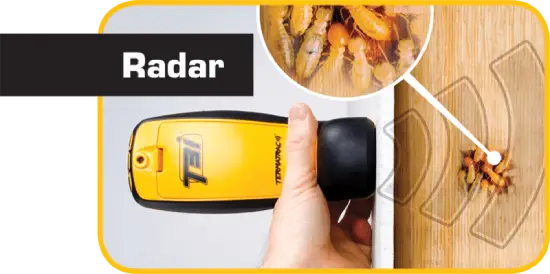
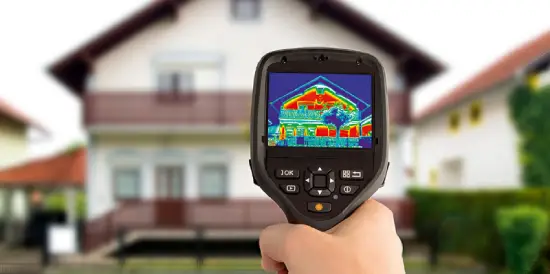
We take time to carry out a comprehensive termite inspection. A termite inspection on an average home on a concrete slab will take 1.5-2 hours. But as you can imagine, larger homes, especially those with large yards and sub-floors can take a lot longer.
If you are deciding which company you intend to use for your termite inspection, this is one of the key questions you should ask, as quality companies will take their time.
Our termite inspection reports are comprehensive multi-page reports with supporting photos. Although we will provide at verbal summary at the end of the inspection, it’s important you read and fully understand the inspection report, as it details all the findings and any actions you must take.
The key information in the report includes:
- Termite activity (species, location, extent of activity)
- Termite damage (location and severity)
- Identified construction faults and environmental conditions that make your property more likely to come under termite attack, and recommendations to remedy these issues
- A report on presence and condition of any pre-existing termite management systems already in place
- A summary of the risk of ongoing and future termite attack
- A recommended termite management plan (termite treatment) to eliminate any current infestation and aid in reducing any risk of future infestations
Governments and building authorities support the Australian Standards, that state that residential buildings should be inspected for termites at least once a year, but more frequently in areas of high termite pressure. In Sydney, once a year is normally enough.
Often an annual termite inspection is required to maintain your warranty on any termite protection or termite treatment on your house.